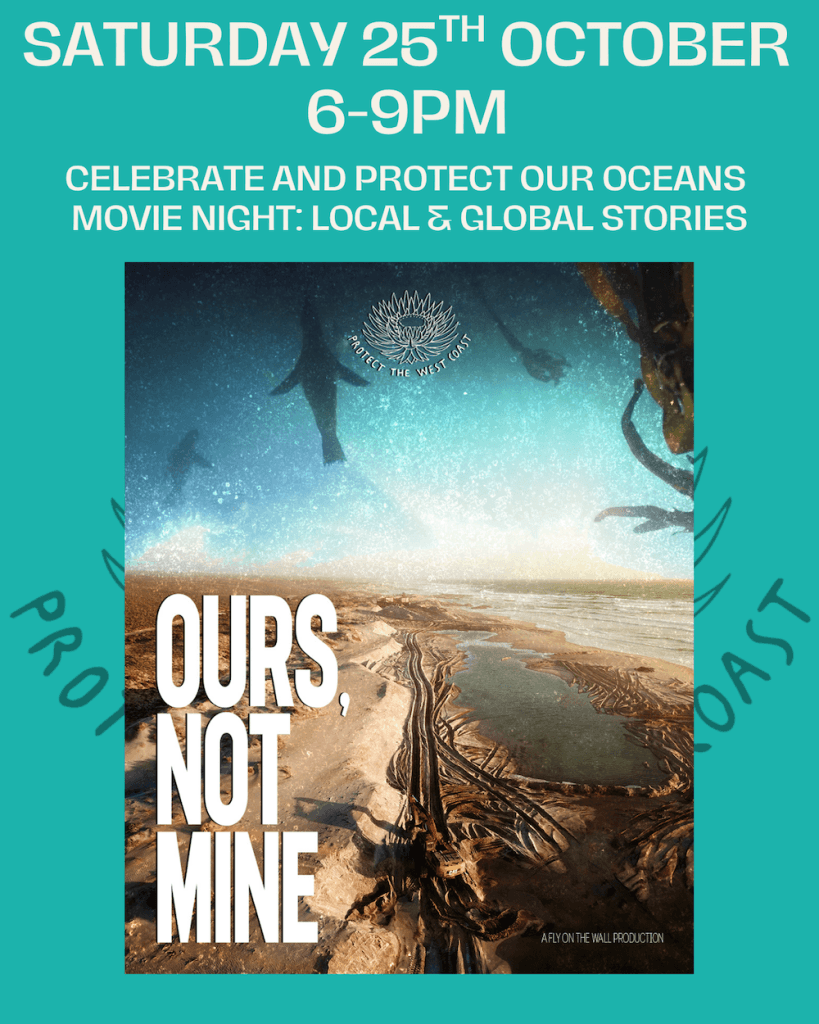
As part of our ongoing sustainability commitment this year we have embarked on a programme of monthly events that will engage with different topics across the Environmental Social Governance (ESG) spectrum with the key purpose to drive positive impact for people and planet. Beyond our own choices of suppliers, packaging, and day-to-day actions we are passionate about becoming a driver of impact in our community and we hope that through these monthly events we are able to do just that.
Relaxing, Learning and Inspiring Change
Our October engagement event was to champion a cause very close to our hearts here at Notos, and something we know is meaningful to many of our customers – our oceans. So on Saturday 25th October we hosted a special ocean film evening — a gathering not just to watch, but to connect deeply with our blue planet and inspire action to do more for our oceans. For a windy, wet and cold evening — right in the middle of the school holidays — we were delighted to share the night with such an engaged group.
How do films make a difference?
We believe in the power of storytelling in a community setting as a catalyst for awareness and action. Environmental films, such as our previous community screening of ACTionism at our Earth Evening in May, combine powerful visuals with storytelling to demonstrate the impact of our actions on the planet and what we can do to create a better tomorrow.
Through the vivid scenes of South Africa’s West Coast, the vibrance of seaweed farming in Pembrokeshire, and the community impact of the Hiraeth Yn Y Môr project, our films were picked to remind us of the ocean’s incredible beauty — and the fragility of the delicate balance we so often take for granted. Stories like these foster empathy, deepen our understanding of human impact on nature, and call us into stewardship.
Watching together also builds community: we share reactions, discuss what surprised or moved us, and collectively reflect on what it means to protect the natural world. These conversations often spark meaningful commitments long after the credits roll.
What We Saw, What We Learned
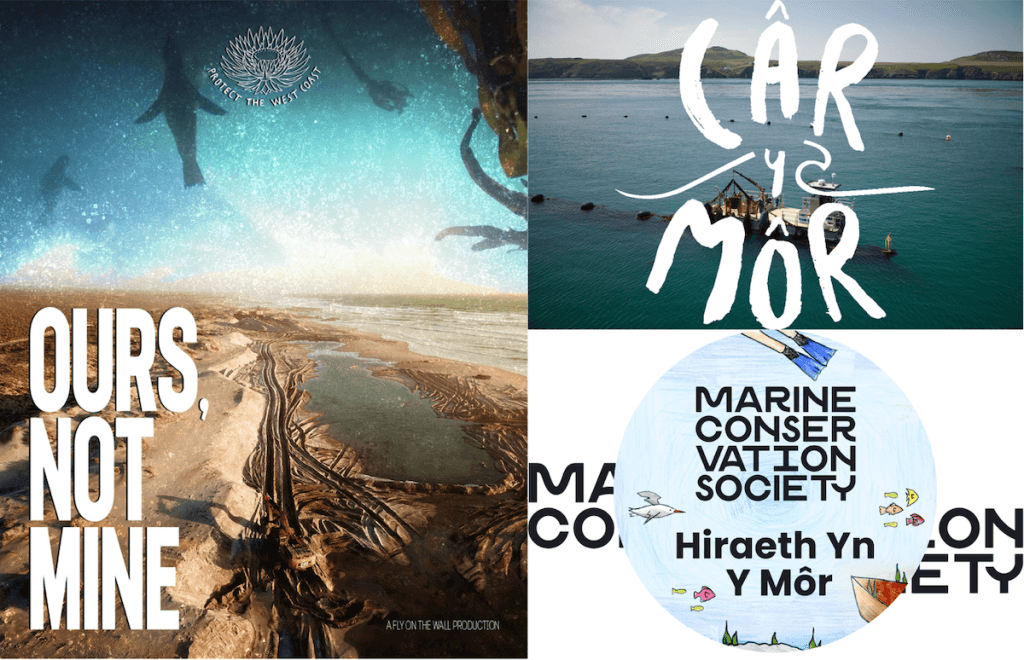
We began with Ours, Not Mine which took us to South Africa’s breathtaking West Coast, a region rich in biodiversity and cultural heritage. The film laid bare the accelerating destruction caused by heavy mineral sand mining; dunes flattened, habitats carved apart, and waters polluted. Yet it was also a story of defiance and determination. Communities across the West Coast are standing up to industrial expansion, challenging inadequate environmental oversight, and fighting to safeguard their land, livelihoods, and ancestral connections. It reminded us that environmental justice is as much about people as it is about landscapes.
The second film, Hiraeth Yn Y Môr, brought us closer to home. Through the work of the Marine Conservation Society, it traced how communities across North-East Wales are rebuilding their relationship with the sea by reconnecting culture, heritage, mental wellbeing, and conservation. The film’s emphasis on storytelling — shared memories, local knowledge, and personal experiences of the coast — highlighted how emotional ties to nature can inspire profound environmental action. It showed that protecting the ocean begins with understanding our place within it, and that sometimes the most powerful conservation tool is simply listening to the voices of a community.
We concluded the evening with Câr-y-Môr: For the Love of the Sea, a compelling documentary about Wales’ first regenerative seaweed and shellfish farm. This film offered a tangible example of what modern marine restoration can look like. Through the cultivation of seaweed and shellfish, Câr-y-Môr is working to regenerate damaged marine ecosystems while creating sustainable jobs and local economic resilience. Its message was hopeful: coastal revival is possible when communities take responsibility for their waters, blending traditional knowledge with responsible innovation.
Together, these three films painted a vivid picture of the challenges facing our oceans — from extractive industry to disconnection from nature — but they also illuminated the strength of communities rising to meet those challenges. Each story reminded us that marine conservation is not abstract or distant; it is personal, immediate, and deeply human.

Choose thoughtfully.
Opt for sustainably sourced, local seafood when you can. It supports responsible fishers and reduces pressure on marine ecosystems.
Cut down on single-use waste.
Bringing your reusable cup or bottle into Café Notos may feel small, but these habits collectively reduce what could end up in our waters. (We are also looking at more ways we can help you reduce your waste when visiting us so watch this space!)
Share your sea stories.
Talking about our connection to the coast — with family, friends, or neighbours — strengthens our sense of responsibility and keeps the ocean present in daily life.
These simple steps, taken together, help protect the incredible coastline we’re lucky to call home.
Just the beginning…
We hope reading about our evening has inspired you, challenged you, and lit a spark. We’d love to hear your thoughts: what moved you most? What commitment will you make? Drop by, email us, message us on Instagram, or talk with friends – it’s all good stuff! Together, we can help turn awareness into action — one choice at a time.
To find out more about our commitment to sustainability.
To take a look at our upcoming events.